
Volunteer spotlight
AABoard volunteers recognized at Google DeepMind Hackathon for AI learning prototypes
April 2026
AABoard volunteers Raahul Krishna and Anish Ummenthala were part of student teams recognized at a Google DeepMind Hackathon at UCLA for projects exploring AI-supported learning, live interaction, creative coaching, and social simulation.
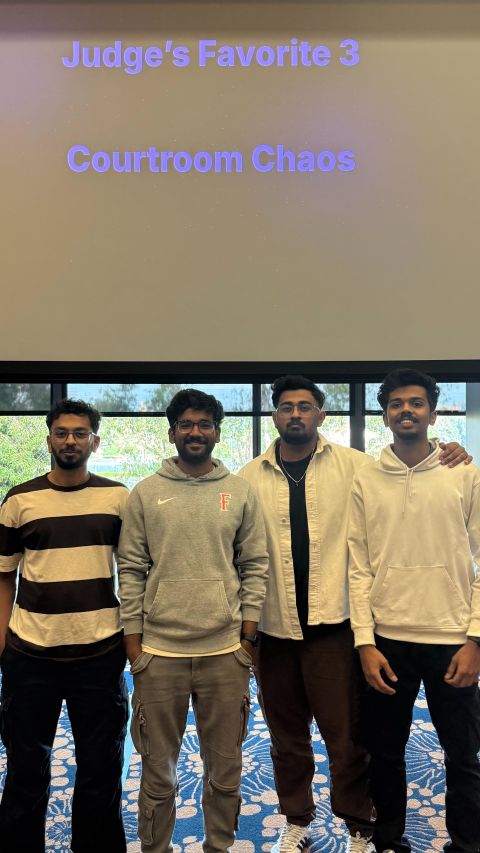
Raahul Krishna contributed to Doodle Dojo, which received Best Overall App. Anish Ummenthala contributed to Courtroom Chaos, which received Runner-Up and Judges' Favorite recognition.
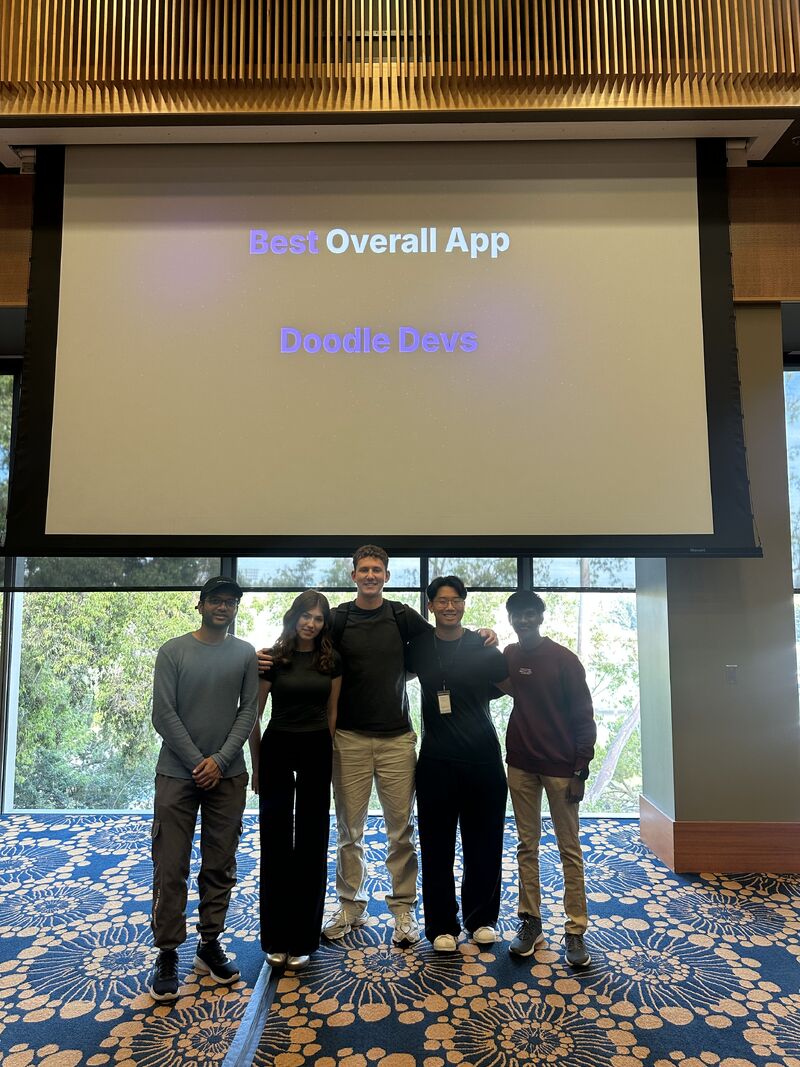
Doodle Dojo: AI as a creative coach
Doodle Dojo turns a photo or text idea into guided sketching lessons, gives live AI coaching while a learner draws, and can animate the final sketch into a short video. The project addresses a familiar learning problem: many beginners want to draw better, but tutorials are often too generic, too long, or disconnected from the learner's immediate drawing process.
For AABoard, Doodle Dojo is relevant as a prototype signal for AI-supported creative learning. It points toward instructional questions about guided practice, formative feedback, learner confidence, multimodal input, and how AI coaching systems should be documented before being used in educational contexts.
Courtroom Chaos: AI as a live social simulation participant
Courtroom Chaos is a real-time multiplayer courtroom game in which players take roles such as prosecutor, defense attorney, defendant, witness, and jury foreperson while an AI judge powered by Gemini Live listens, interrupts, reacts, changes tone, and delivers a dramatic judgment.
The project is relevant to AABoard because it illustrates how AI can become part of a social simulation rather than only a chat or content-generation tool. The learning implications include argumentation, evidence-based reasoning, role understanding, critical thinking, spoken interaction with AI, and the design of safeguards for emotionally expressive AI systems.
Why AABoard is tracking these prototypes
These projects are not formal AABoard standards or endorsed learning systems. They are student-built prototypes that surface important design questions for AI literacy education: What feedback should AI give during practice? How should learners understand AI agency and limits? What evidence should be collected when a system claims to support learning? How should AI-mediated role-play be evaluated for educational value and responsible use?
AABoard tracks prototype signals like these because AI literacy standards need to stay connected to emerging practice. Creative coaching and social simulation show that AI in education is moving beyond static content delivery toward interactive experiences that require stronger documentation, safeguards, and assessment language.